
06 / Team operations · Community organization
Task Manager
Commitments were arriving through conversation, meetings, Slack, and automated systems—but follow-through had no single home. This platform gives each person a trustworthy work queue while keeping delegated tasks, recurring responsibilities, notes, and reminders connected.
The real product
Know what is open, what is next, and who owns it.
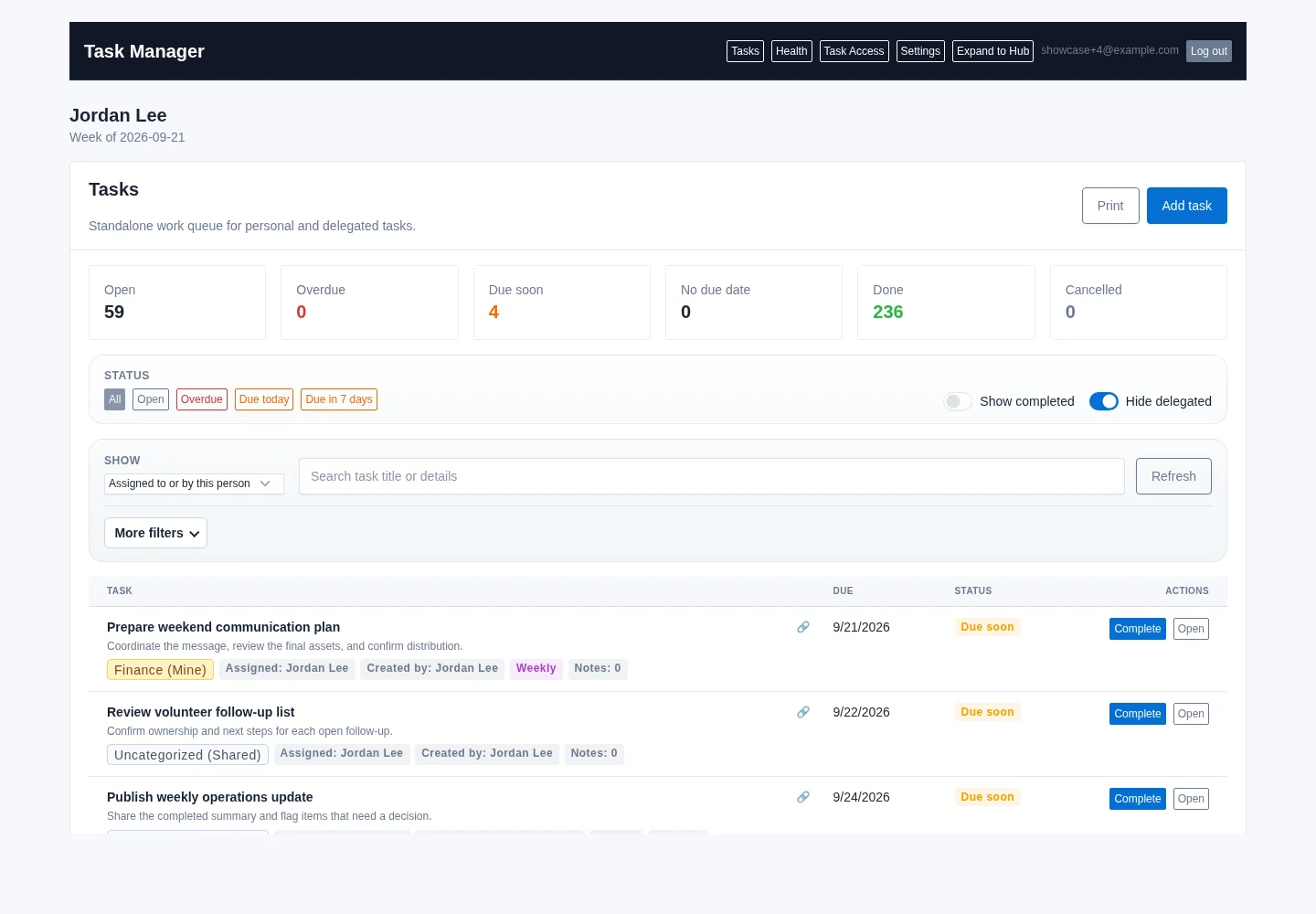
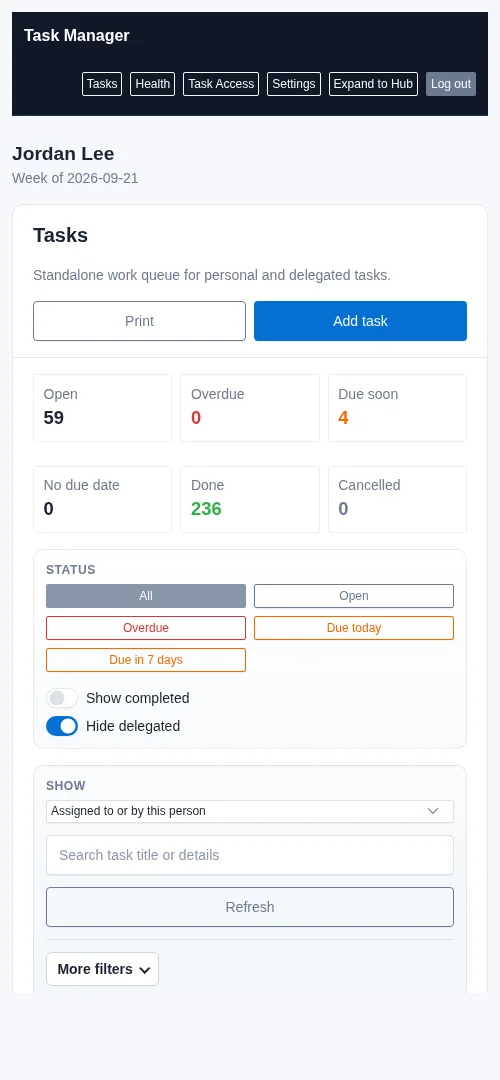
The desktop view makes workload and due dates scannable. On a phone, the same controls collapse into a practical staff workflow for filtering, adding, completing, and following up on tasks wherever work happens.
Real production interface · anonymized representative staff data
Why it was built
Work was getting assigned. The system needed to remember it.
Small organizations often have complex responsibilities without a dedicated operations department. Tasks can begin in a staff conversation, recur every week, depend on another person, or be generated by a separate system.
This application makes those promises durable. It preserves ownership and context, supports private self-managed work, and gives supervisors the visibility to help without flattening everyone into the same queue.
Organizational value
A shared operating rhythm without enterprise overhead.
- OwnershipPersonal and delegated work
- RhythmRecurring task chains
- ContextNotes and attachments
- FocusDue-date and status views
- AlertsConfigurable Slack reminders
- AutomationToken-secured task API
Measured operational use
A living record of work—not another empty productivity tool.
The product is actively carrying recurring and delegated responsibilities across the organization. Completion history gives the team a durable record while current views keep attention on the next useful action.
Aggregate production records through September 20, 2026. Screenshots use anonymized sample content.